
WHAT IS AIR POLLUTION?
Air pollution is a mixture of invisible gases and tiny particles in air.
While some wider pollution occurs naturally from things like desert dust, forest fires and sea salt, most local pollution is created by people including traffic, heating, industry and power generation.
You can protect yourself and loved ones from sources of pollution by understanding the sources and its effect.
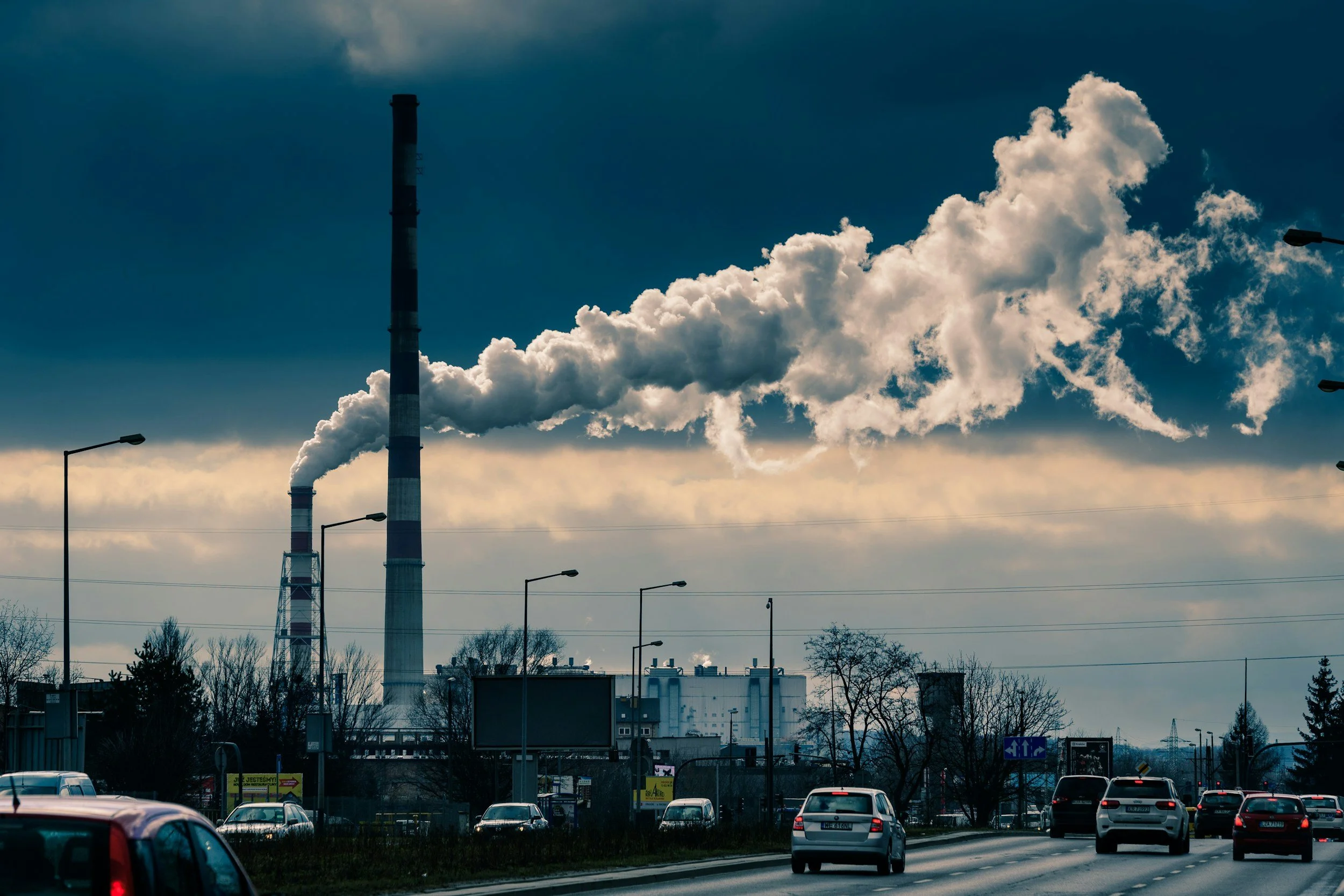

Outdoor Air Pollution
-
Particulate Matter (Dust)
Particulate matter is made up of tiny particles suspended in air, the technical term for fine dust. These particles come from vehicle exhausts and brakes, road surfaces, construction, industry, chemicals and burning fuel. All but the largest are invisible and penetrate deep into lungs. London's traffic-heavy streets produce high levels of particulate matter, as do dirty sources like wood burning.
-
PM₂.₅ (fine particulate matter)
PM₂.₅ refers to particles smaller than 2.5 micrometres (about 1/30th the width of a human hair). Because they are so tiny, you inhale them deep into lungs and they can enter your bloodstream. In London, PM₂.₅ comes mainly from vehicle exhausts and burning fossil fuels. PM₂.₅ is the pollutant of greatest concern for health, linked to heart disease, stroke, lung problems and many other diseases. Reducing exposure to these really helps to protect your health.
-
PM₁₀ (coarse particulate matter)
PM₁₀ particles are larger than PM₂.₅ but still only visible when they coat surfaces with dust. They measure up to 10 micrometres and come from road dust, construction, vehicle wear and pollen. These settle in upper airways and throat. In London, construction and road dust contribute significantly. While less harmful than PM₂.₅, it can cause symptoms in asthma and chronic lung conditions. Long-term exposure is linked to airway cancer, bronchitis and other diseases.
-
Nitrogen Dioxide (NO₂)
Nitrogen dioxide is a reddish-brown gas created mainly by vehicle engines and gas boilers. In London, road traffic and heating create most NO₂. This gas irritates airways, worsening asthma and making infections more likely. Children and people with lung conditions are vulnerable. Long-term exposure increases respiratory disease risk and affects lung development. NO₂ also reacts with sunlight to form ground-level ozone.
-
Ground Level Ozone (O₃)
Ozone is a hazardous gas made by reactions between UV sunlight and pollutants like NO₂. It irritates eyes and airways, triggering coughing and wheezing. It can cause asthma attacks, damage plants and crops, and contributes to climate change. On warm sunny days in London, ozone can build up by afternoon and trigger throat irritation and asthma. It is also a greenhouse gas. In the upper atmosphere ozone plays an essential role protecting Earth by absorbing UV radiation.

Indoor Air Pollutants
Indoor sources also pose serious health risks.
-
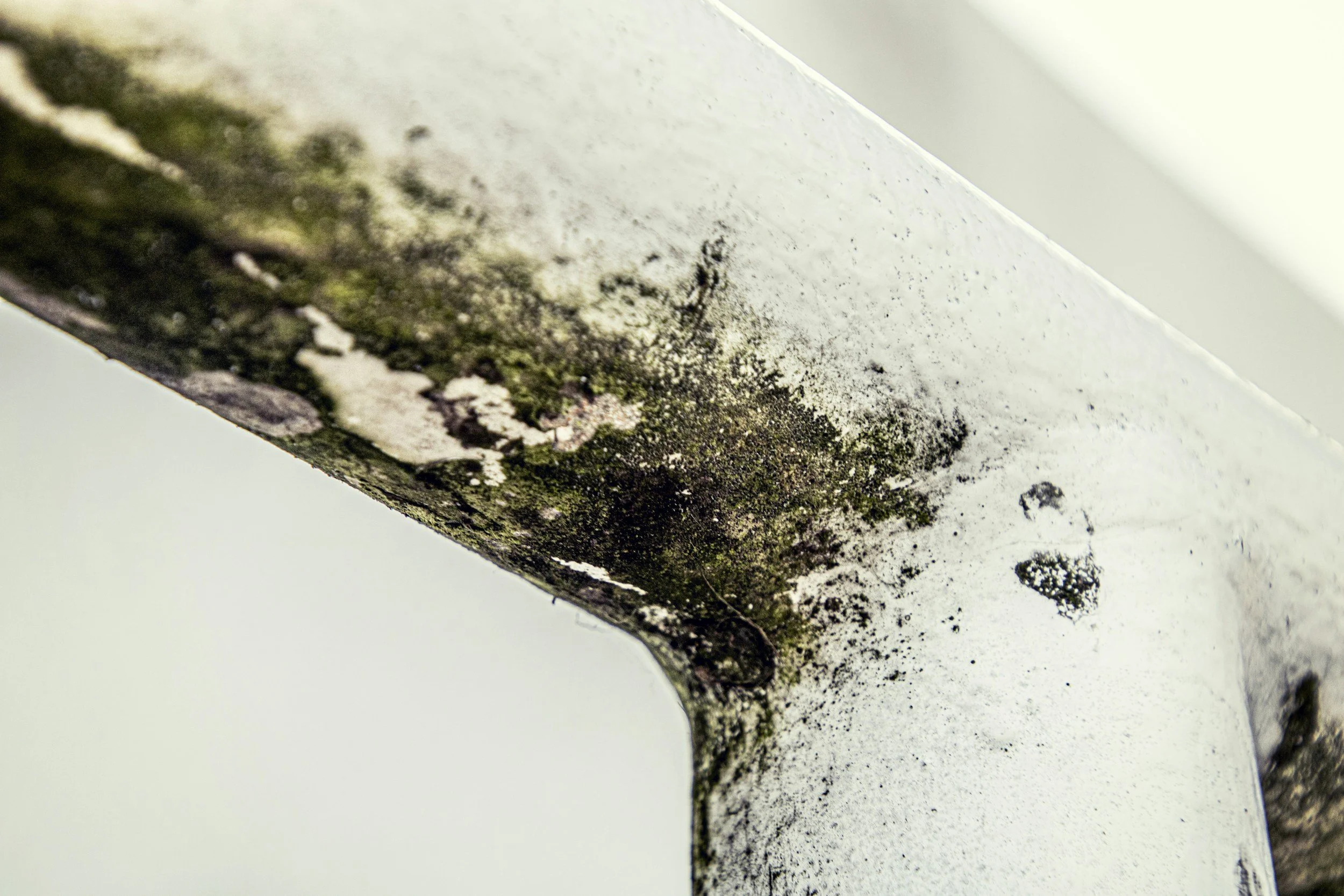
Black Mould and Damp
Black mould grows in damp, poorly ventilated spaces and releases spores continuously. Breathing spores triggers allergic reactions, asthma attacks, and infections. People with weakened immunity face severe complications. Damp also promotes dust mites and allergens. In London's older properties and poorly maintained buildings, damp is a common issue, especially in bathrooms, kitchens, and basements. Improving ventilation, fixing leaks, and reducing humidity prevents mould.
-
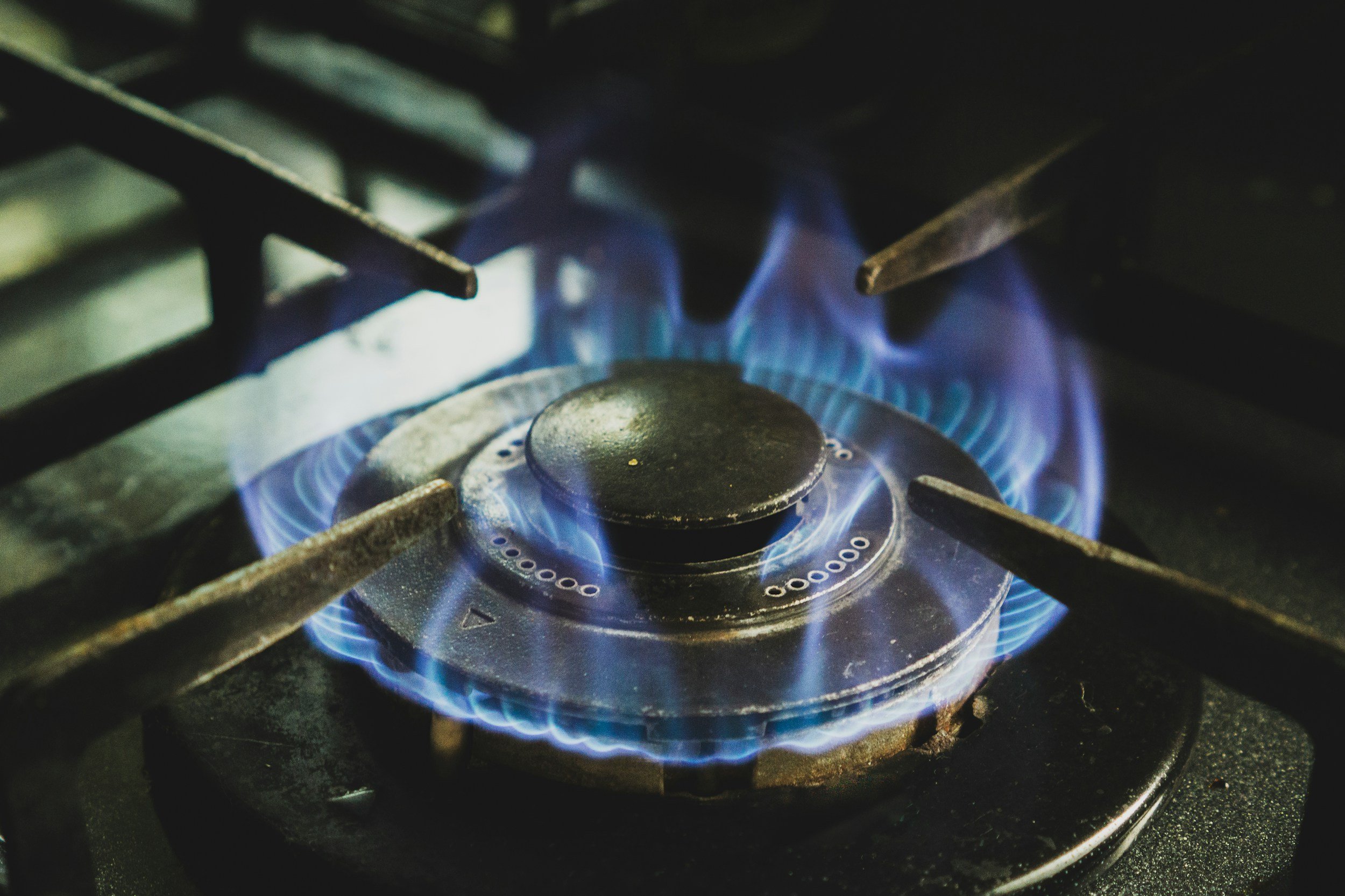
Carbon Monoxide (CO)
Carbon monoxide is a colourless, odourless gas produced by burning gas, oil, coal, or wood in boilers, cookers, and fires. Faulty appliances and blocked chimneys can cause dangerous levels indoors. CO binds to blood and starves the body of oxygen. At high concentrations it causes headaches, dizziness, confusion, and even death within minutes. Lower exposures cause tiredness, headaches, and chest pain. All homes with appliances that use fossil fuel need ventilation, a CO detector and regular safety checks.
-

Particulates and Smoke
Cooking and other combustion indoors like wood burning, candles or incense cause particulates. They have the same effects as outdoor particulate matter, but in kitchens or near fires can build up very quickly. Always ventilate the kitchen when cooking and avoid burning in the home.
Reducing Air Pollution
In some parts of the world, air pollution remains a serious challenge. In the UK, through regulation and cleaner technology many serious pollutants have been eliminated.
The two greatest environmental challenges that we face today are air pollution and climate change, they are inextricably linked and action to prevent climate change can also help to reduce air pollution long term. Responding to both challenges requires vigilance, technological solutions and public education.

Further Reading
EXTERNAL WEBSITES
You can find more information and local updates here:
WHO Air Quality Guidelines – Evidence-based global recommendations for protecting health from air pollution
IQAir World Air Quality Information – Real-time global air quality data and interactive mapping