
HOW AIR QUALITY REGULATIONS PROTECT YOU AND HOW TO MAKE A COMPLAINT
Air quality is regulated at national, regional and local levels, however councils have a vital role to play in regulation of polluting activities. Below you can learn about how regulations protect you and what you can do if you have concerns.


For Residents
Improving local air quality
Local Air Quality Management is the legal process local authorities use to review air quality. Councils declare Air Quality Management Areas (AQMAs) where national objectives are not met and can also set tighter local targets. Once an AQMA is established, Councils then create Air Quality Action Plans (AQAPs) describing pollution reduction measures. Progress is reported annually in Air Quality Annual Status Reports (ASRs) published on council websites. These often involve local community groups, schools, business and transport operators in making air pollution better.
Find out more: Visit the Your borough section to access your local council’s website, where you will find Air Quality Action Plans and Reports that describe the measures being taken in your area and how you can get involved.
-

Smoke Control Areas
Nearly all London boroughs have dedicated Smoke Control Areas (SCAs) under the Clean Air Act 1993. In these areas, it is an offence to emit smoke from chimneys.
Clean Air Act requires us all to:
- Use only authorised fuels (certified as "Ready to Burn") or exempt appliances (tested wood burners, stoves). Note: the description "approved" is sometimes used by suppliers – this is not the same as an "exempt appliance".
- Check DEFRA's list of authorised fuels and exempt appliances before purchasing.
Penalties: Fines up to £1,000 for using unauthorised fuels can be applied. Councils use an escalating enforcement approach: written advice, site visits, then formal action if needed. Especially problematic is waste wood, which often contains toxic materials.
-

Smoke Nuisance (Bonfires and Barbecues)
Depending upon the circumstances, smoke from bonfires and barbecues can be dealt with as statutory nuisances. If the Council confirms a nuisance exists or is likely to recur, a legal notice can be served, though informal resolution is attempted first.
Advice:
- Never ever burn waste wood. This often contains toxic metals and insecticides.
- Never burn wood or garden waste in the open air.
- Contact your local authority if affected by smoke nuisance.
-
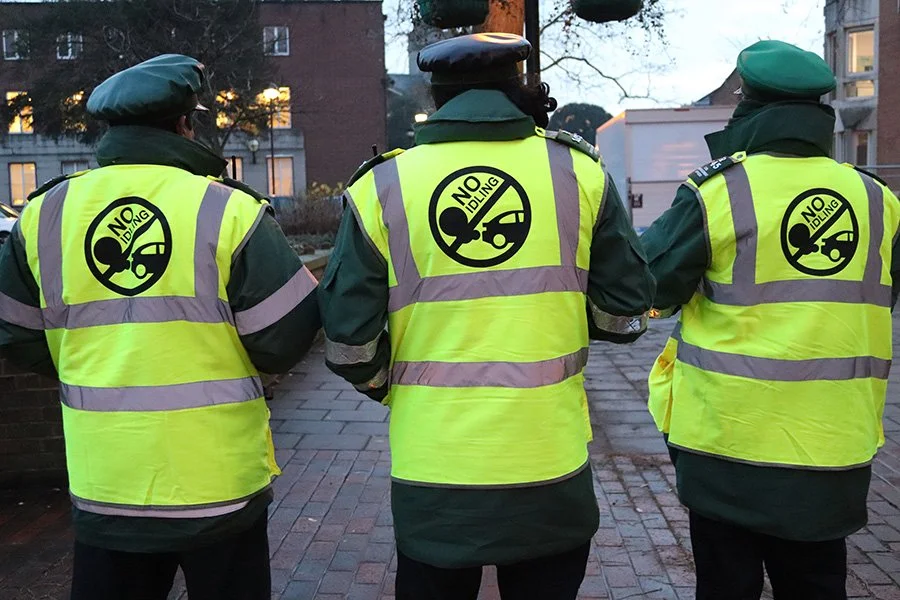
Idling Vehicles
Leaving engines running while stationary for longer than one minute is known as 'idling'.
Why it matters: Research shows idling for 30 seconds produces nearly twice as much pollution as switching off then restarting the engine.
The law: Under the Road Vehicles (Construction and Use) Regulations 1986, drivers must switch off engines in stationary vehicles. Councils can issue Fixed Penalty Notices (FPNs) or Penalty Charge Notices (PCNs) to drivers who continue idling.
What you can do: Switch off your engine if stationary for more than one minute. Report persistent offenders to your local authority.
-
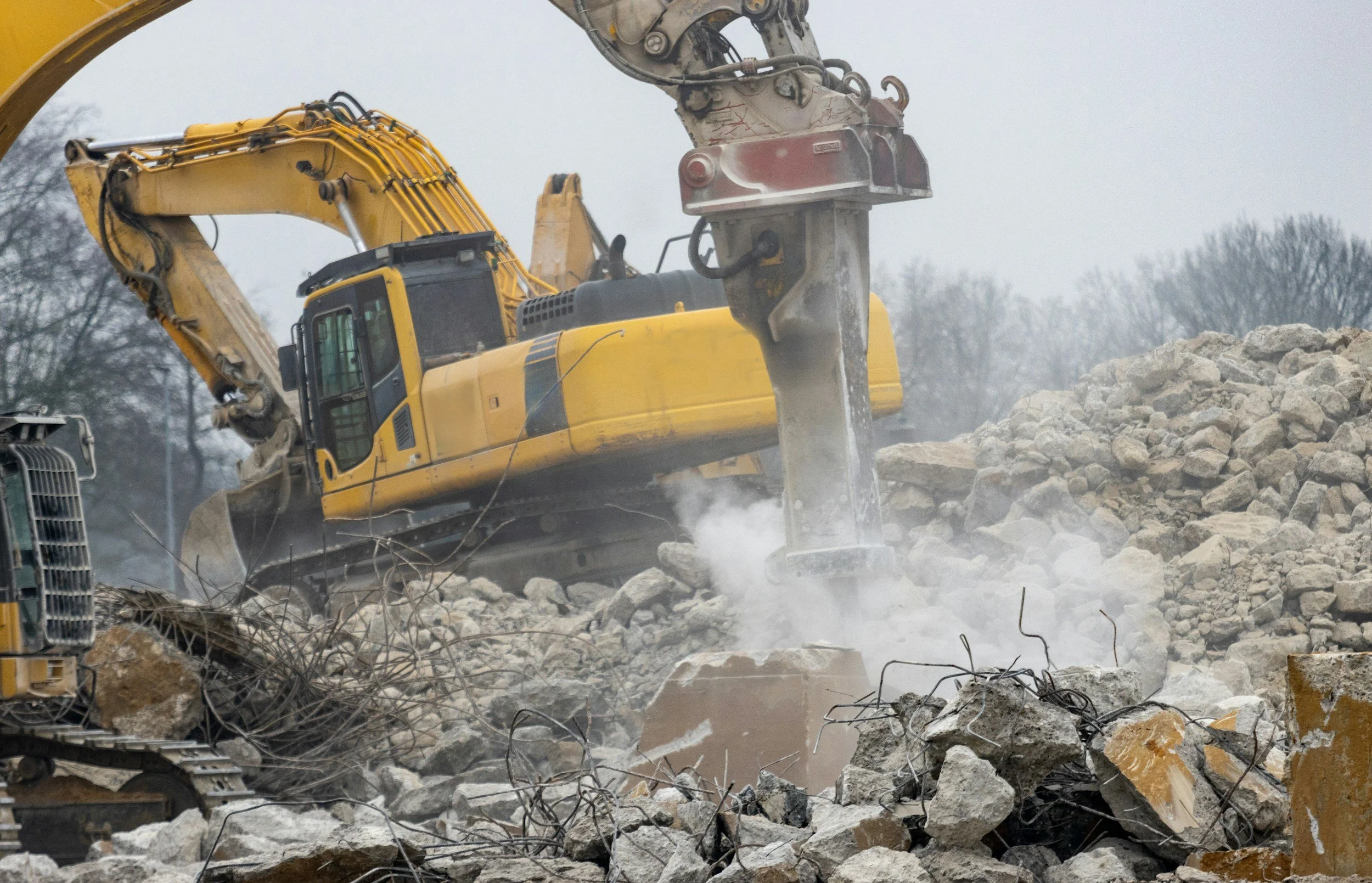
Dust from Construction and Demolition
Dust from construction and demolition sites poses health risks, particularly fine particles. Common sources include:
- Vehicle and plant movement
- Materials handling and storage
- Cutting, grinding, grit blastingProtection measures: To protect residents during the construction phase the Council can place strict planning conditions on new development to ensure that emissions are managed and monitored. Councils enforce codes of practice requiring dust minimisation measures on construction sites.
Dust from mobile crushing plant is controlled by an environmental permit under the Local Authority Pollution Prevention and Control (LA-PPC) regime.
What you can do: Report excessive construction dust to your local authority.
Making a Complaint
If you have a concern about air quality, please report it to your Council. Common reportable issues include:
Dust or air pollution caused by construction
Smoke or fumes from a residential property
Smoke or fumes from a business
Smoke or fumes from a garden or allotment
Pollution around a school
Fumes from vehicle engine idling
Reporting air quality concerns: To make an air quality complaint, visit your local authority website for borough-specific guidance.
Each council has specific contact details and reporting procedures for different types of air quality issues, please use the links below.

For Businesses & Operators
Environmental permitting requirements apply to specific business activities that may cause air pollution. If your business operates any of these processes, you must obtain an environmental permit before operating.
-
Combustion and incineration:
Boilers and furnaces (20-50 MW)
Gas turbines (20-50 MW)
Waste oil and recovered oil burners
Crematoria
Minerals sector:
Bulk cement operations (blending, packing, loading, unloading)
Quarry processes
Mobile crushing and screening
Petroleum sector:
Petrol station fuel unloading and storage
Solvents sector:
Vehicle coating and respraying (original coating and repair)
Metal and thermal spraying processes
Dry cleaning operations
Environmental Permitting Regulations
Businesses that may pollute air, land or water are controlled by the Environmental Permitting (England and Wales) Regulations 2016. The Environment Agency (EA) regulates major industrial installations (Part A); local authorities regulate less polluting installations under Part A(2) and Part B.
Key requirements:
Part A(2) installations: require LA-IPPC permits (controlling emissions to land, water and air, plus noise)
Part B installations: require LAPPC permits (controlling emissions to air only)
Operating without a required permit is illegal
Operators must use "Best Available Techniques" (BAT) to minimise emissions
What you must do:
Check if your business requires an Environmental Permit to operate
Apply for the appropriate permit before operating
Follow process guidance notes defining BAT for your installation (Part A(2), Part B)
Operators will also find it useful to read DEFRA's 'General Guidance Manual on Policy and Procedures for A2 and B Installations'
Permit Applications and Variations
An operator may:
Apply for a new permit
Apply to vary an existing permit
Apply to transfer a permit to another operator
Surrender a permit where the process is no longer operative
Find out more: Contact your local authority for forms, fees, and guidance.
Register of Permitted Processes
Local authorities maintain a public register of permitted processes.
What you can do: Contact your local authority to inspect the register.
Construction and Demolition Sites
Sites must follow codes of practice minimising dust emissions. London boroughs follow the "Pollution and Noise from Demolition and Construction Sites" code of practice and the GLA's "Control of Dust and Emissions from Construction and Demolition: Best Practice Guidance."
What you must do:
Implement dust control measures specified in planning conditions which may include continuous dust monitoring
Where continuous dust monitoring is required the details must be approved by the council prior to deployment
Follow borough codes of practice / air quality supplementary planning guidance
Register Non-Road Mobile Machinery operated on site (NRMM)
Appoint a site manager responsible for dust control
Respond promptly to complaints
Development Control
Pre-consultation with relevant council departments especially for major development sites is crucial. Prior to undertaking an Air Quality Assessment the scope and methodology must be approved by the council.
What you must do:
Follow borough specific air quality supplementary planning guidance and provide the following as required:
Air Quality Neutral Assessment of building and transport emissions
Air Quality Assessment to include demolition, construction and operational phases
Construction Environmental Management Plan
Construction Logistics Plan
Delivery and Servicing Plan
Government and Regional Action National Air Quality Strategy
The Department for Environment, Food and Rural Affairs (DEFRA) manages UK air quality through the Air Quality Strategy, which:
Lists pollutants of concern
Sets air quality standards and objectives
Describes the framework for air quality planning

Further Reading
EXTERNAL WEBSITES
You can find more information and local updates here: