
WHAT CAN I DO TO PROTECT MYSELF AND OTHERS?
Understanding the causes and impact of pollution can help reducing personal exposure and the pollution you create.
Improving air quality is achievable through everyday actions and small lifestyle changes, like altering travel habits and avoiding garden or home burning, can help you avoid breathing in or causing air pollution. Reducing personal exposure and pollution impact is achievable through everyday actions, helping create cleaner, healthier air for everyone.


Every Day Changes
There are small things you can do every day to protect your health from air pollution and make a big difference to local air quality.
If you or your family are vulnerable to pollution, ensure you are aware of the sources of pollution in and outside you home so you can take action.
Sign up to free air pollution forecasts from airTEXT, the London Air Quality Network, or Defra’s UK-AIR forecast. These help you plan ahead, especially if you have a condition like asthma or heart disease that may require medication.
For advice on keeping air inside your home healthy, see our Indoor Air Quality page.
Travel outside of peak times when air pollution is lower.
Choose active travel as often as possible. This both reduces your exposure and helps your fitness and resistance to air pollution.
When walking, keep away from the edge of the road as pollution levels drop quickly with distance.
When walking or cycling, use a quieter route away from main roads, if safe to do so.
Avoid burning garden waste and wood or coal indoors if you have another way to heat your home.

Active Travel
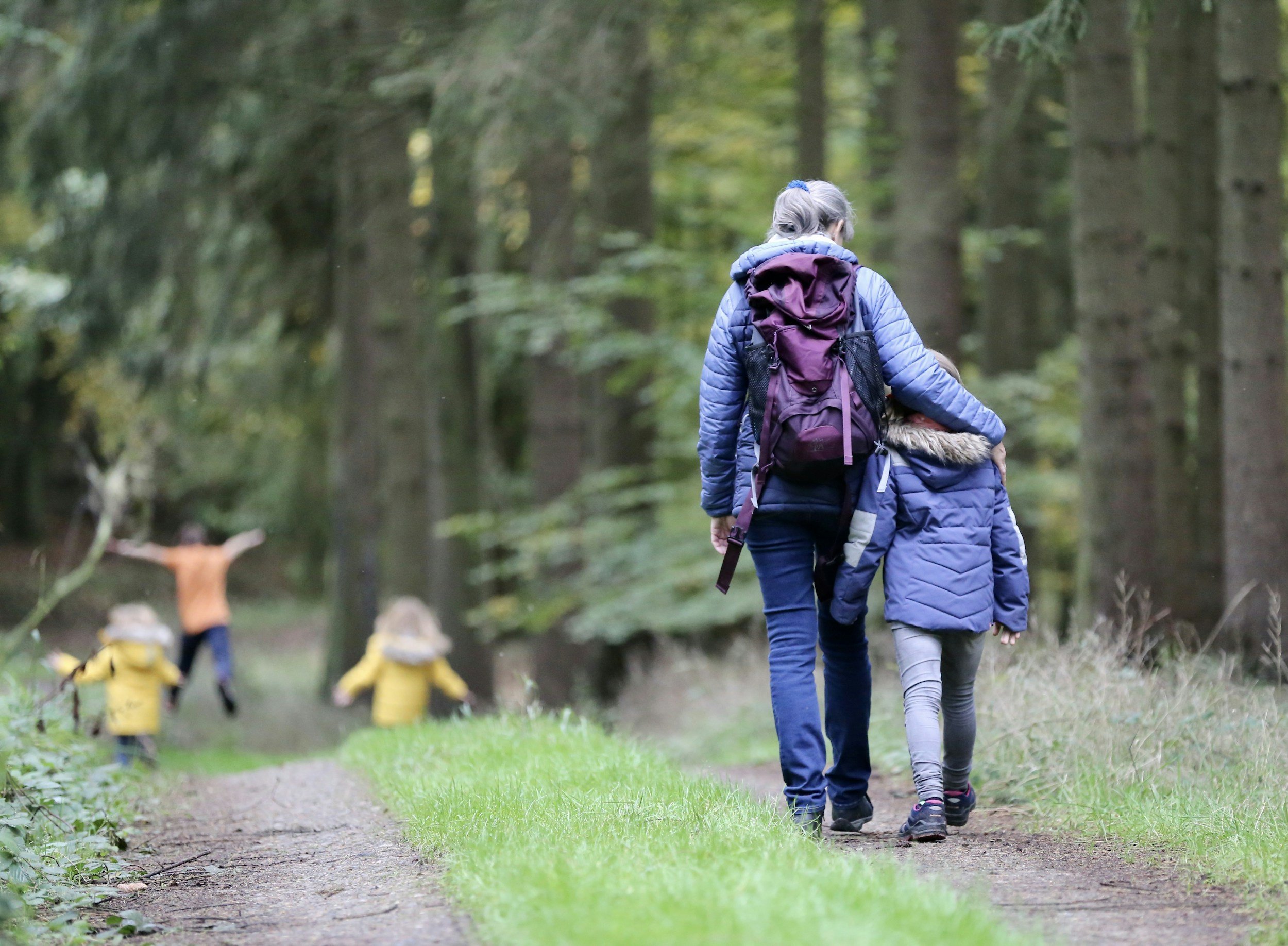
Active travel is one of the best ways to tackle air pollution and climate change. It also improves our health through exercise and can save you money.
In London, most boroughs offer free or subsidised cycle training for residents, students and workers. Visit your local council’s website for details: Merton, Wandsworth, or Richmond upon Thames.

If you need to drive
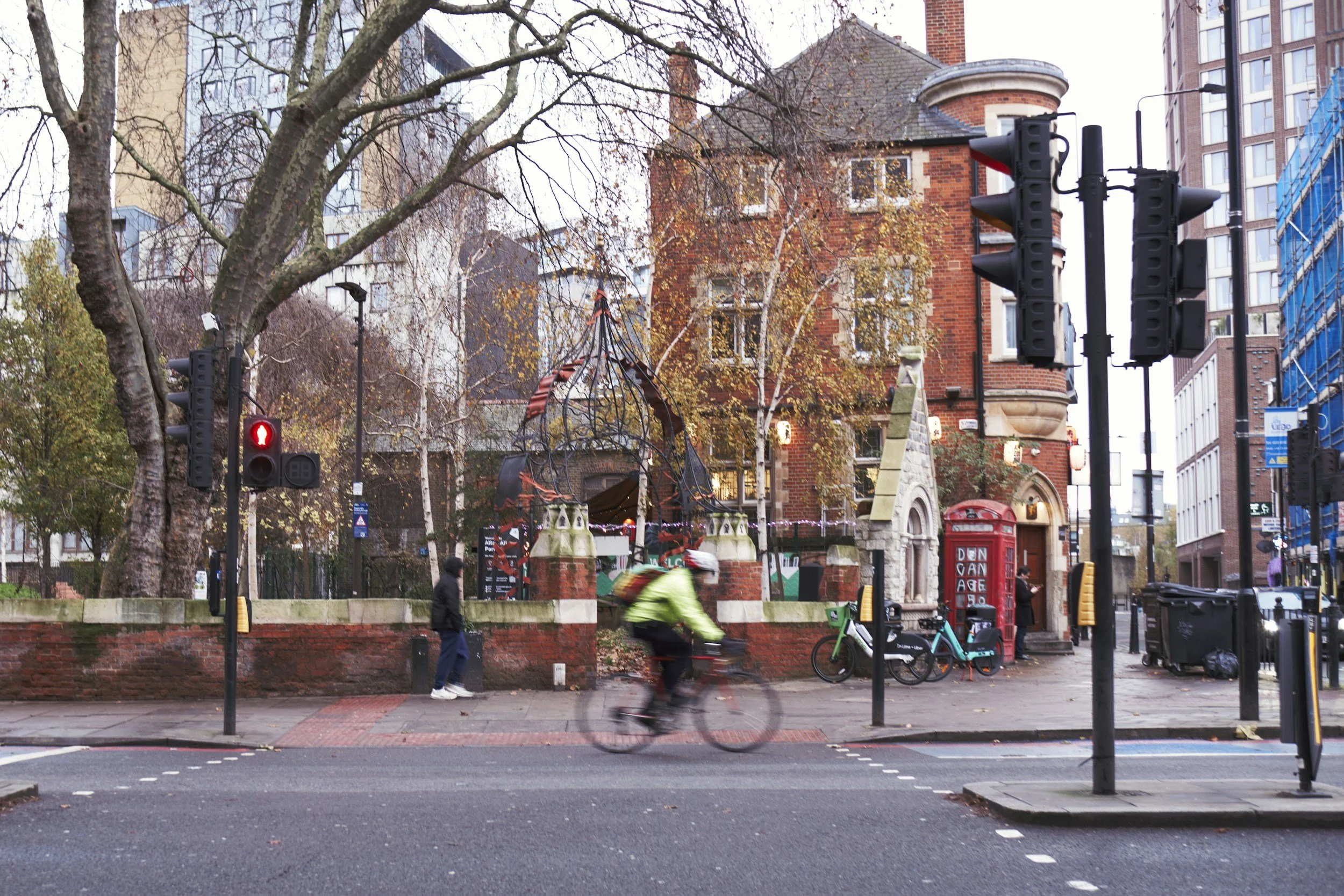
People in cars are often exposed to higher pollution levels than those walking or cycling, but you can easily reduce this risk, as well as help improve local air quality through your driving habits.
When using heaters or air conditioning, use the recirculate air setting to avoid pulling in exhaust fumes from other vehicles.
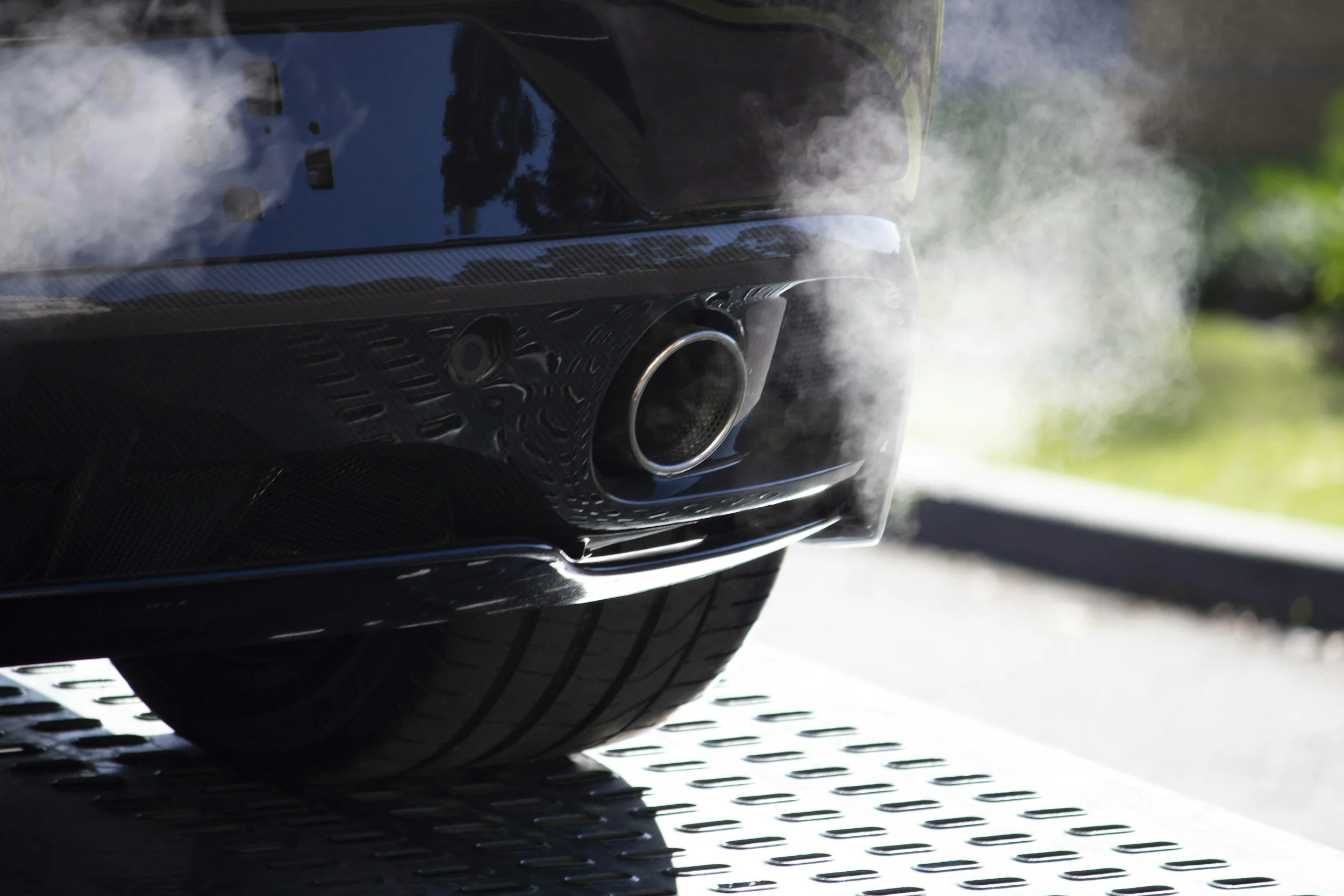
Switch off your engine when parked for more than one minute. Idling engines create unnecessary emissions, it is illegal and especially harmful near schools or pedestrians, and can be subject to a fine.
Drive smoothly. Anticipate the road ahead, avoid sharp braking or acceleration, and keep your tyres and brakes in good condition. This helps reduce fuel use and emissions.
Try electric. If you are thinking of changing your car, try an electric or hybrid model. Pure EV’s don’t create local nitrogen dioxide and many have regenerative braking reducing pollution from brake discs. They can however be heavy and create more tyre wear pollution, but they don’t have the engine particulates we see in the internal combustion engine. You can find public charging points across London, and local car clubs often include electric vehicles.

Domestic wood burning
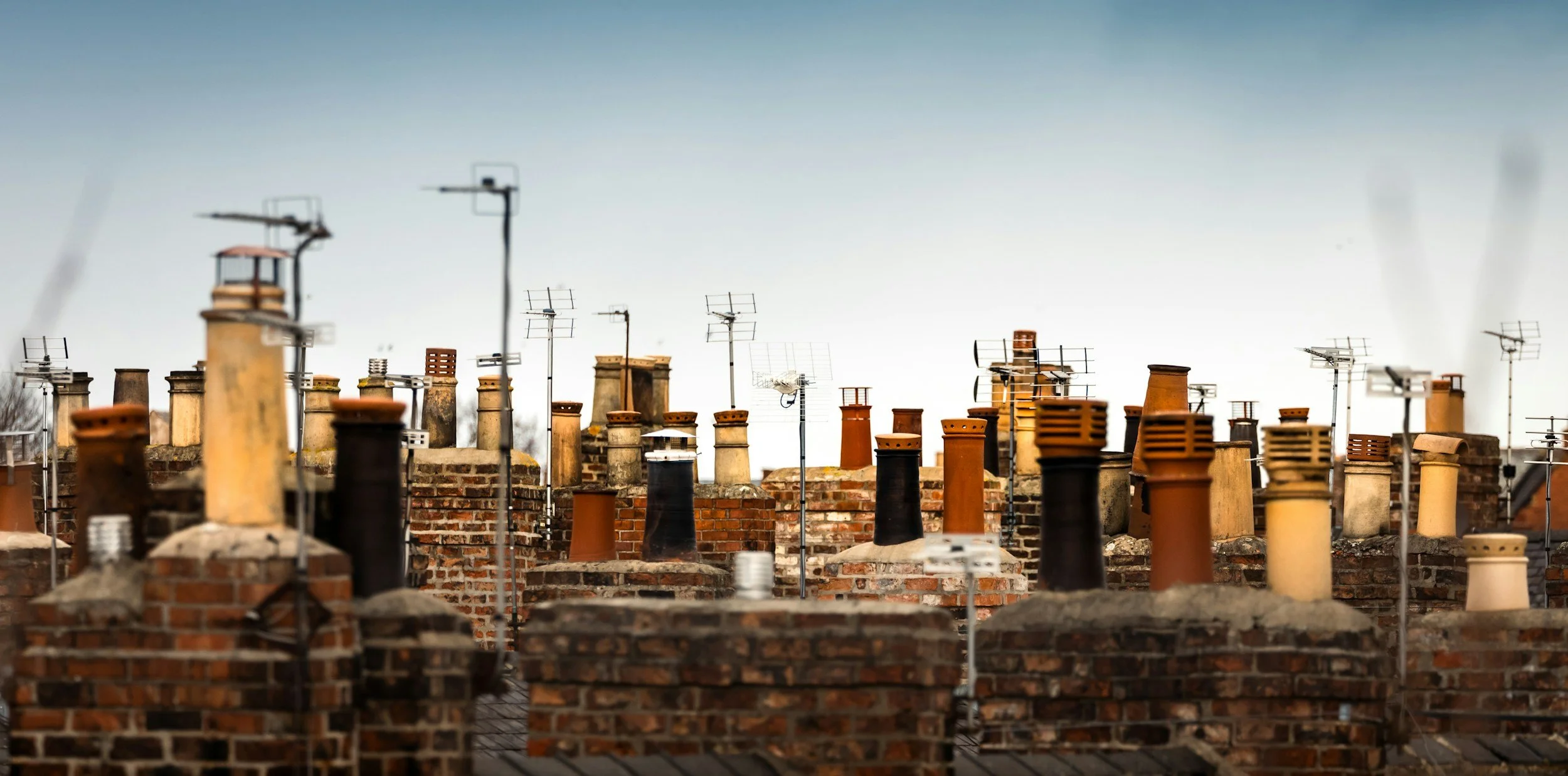
Burning coal is illegal in London. Wood burning is also very strictly regulated and only permitted in approved stoves using kiln-dried wood. We strongly advise not burning wood at all if you have another way to heat your home.
If you do use a stove, make sure it is an authorised appliance and that you only burn “Ready to Burn” kiln-dried wood with the correct certification. Never burn waste wood, painted or treated timber, as these often contain toxic metals.
For clear guidance see the Greater London Authority’s Guidance for wood burning in London.
In London, nearly all boroughs have Smoke Control Areas. Using the wrong appliance or fuel can result in fines. You can find local rules here:
Merton,
Wandsworth,
Richmond upon Thames.

Garden waste disposal
Bonfires are a significant local source of air pollution, particularly in still weather when smoke lingers. Smoke can cause nuisance to neighbours and harm people with breathing problems. It’s seldom necessary, as there are better alternatives.
Use your borough’s garden waste collection or composting services instead of burning. Check local guidance:
Merton garden waste collection service,
Wandsworth disposal options,
Richmond upon Thames garden waste collection, and neighbouring boroughs Croydon, Sutton, and Hounslow.
Councils can take action where smoke causes a nuisance, so it’s best to avoid burning altogether.
No commercial premises or business should use bonfires as a way of disposing waste.

Save energy, save money and cut pollution too.
After the car (internal combustion engine) the next largest contributer to air pollution is from heating. The way in which we heat our homes is important, not only to local air pollution but from a carbon perspective.
Insulating the home means we need to use less energy and loilers don’t need to run as long.Using less energy for heating and hot water means burning less gas or oil, cutting both carbon dioxide and local air pollution. It also saves money.
You can find practical advice on making your home more efficient from the Energy Saving Trust.
You can also estimate your carbon footprint and see how small changes help using the WWF carbon calculator.
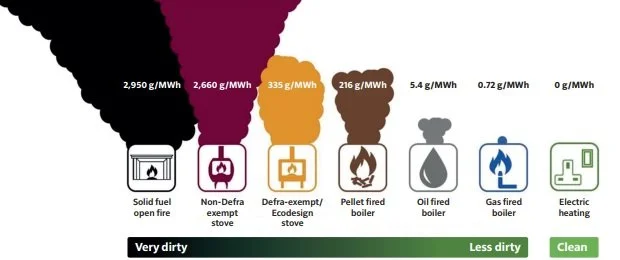
There is a substantial difference between the least and most polluting methods of domestic heating.
Note: The air pollution emissions will also depend on the age of the appliance, how it is maintained and used and the fuel burned (for example, dry or wet wood).
The following definitions were used: Solid fuel open fire: wood burned in an open fire. Non-Defra-exempt stove: wood in a conventional stove. Defra-exempt/Ecodesign stove: wood in an advanced/ecolabelled stove. Pellet fired boiler: wood in pellet stoves and boilers. Oil fired boiler: fuel oil in a medium (>50KWth <1MWth) boiler. Gas fired boiler: natural gas in a small (≤50kWth) boiler.
Source: Emission factors taken from EMEP 2019 Guidebook (1A4 small combustion tables). Adapted from the Clean Air Strategy with updated data

Further Reading
EXTERNAL WEBSITES
You can find more information and local updates here:
airTEXT – free air pollution alerts and forecasts for London
London Air Quality Network – live local monitoring and advice
Defra UK-AIR – national data and forecasts
Energy Saving Trust – save energy at home
Asthma + Lung UK – health advice on pollution and air quality